ZeroClaw: Could This Be the Best OpenClaw Alternative?
OpenClaw has been blowing up lately. It hit about 180,000 stars on GitHub, the creator just got hired by OpenAI, and everyone is trying to run it. The problem is it’s heavy.
It uses over a gig of RAM and takes a long time to start. If you’re on anything that isn’t a beefy machine, good luck. Many of you told me about an alternative, and after looking into it, it actually looks amazing.
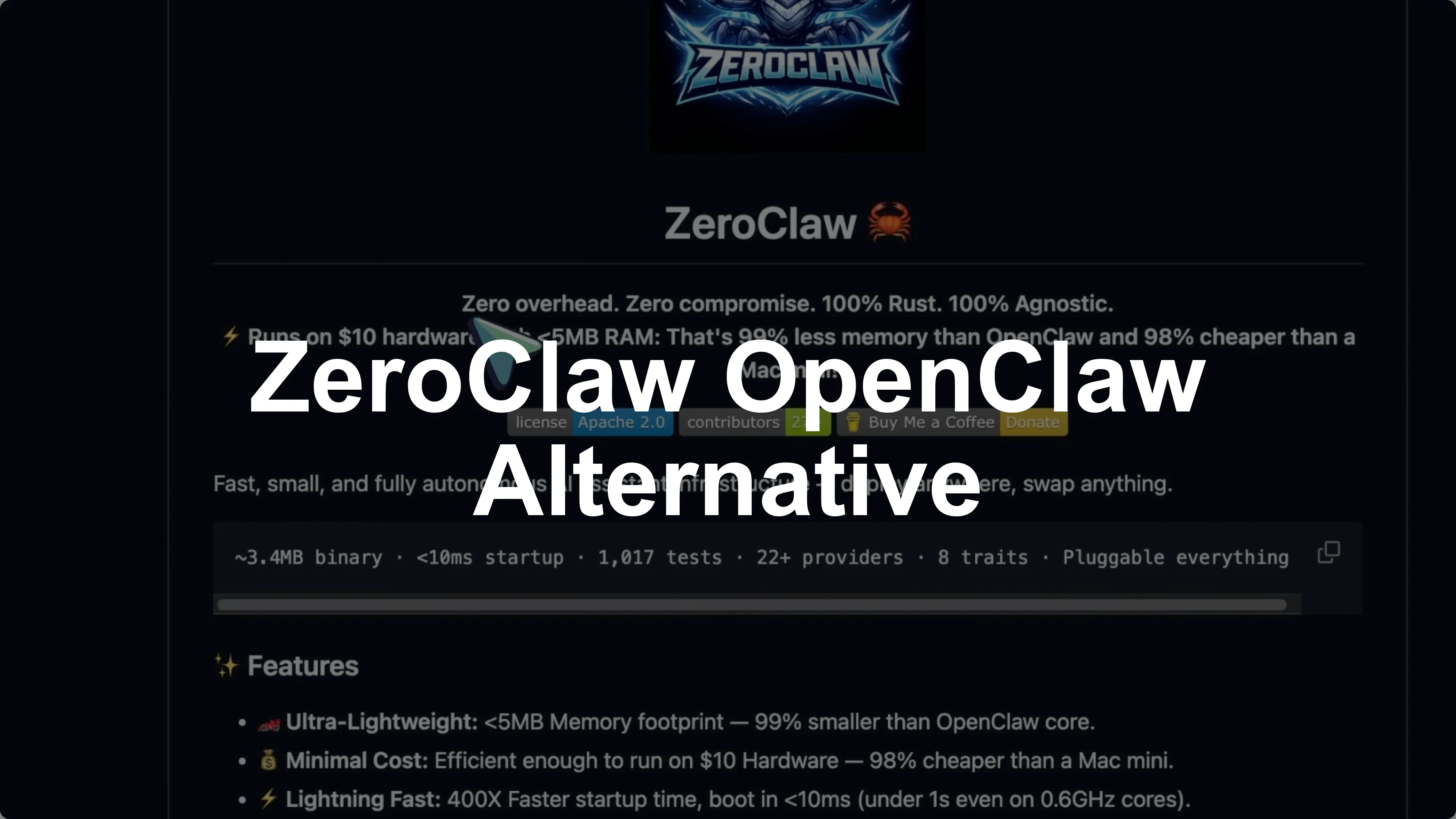
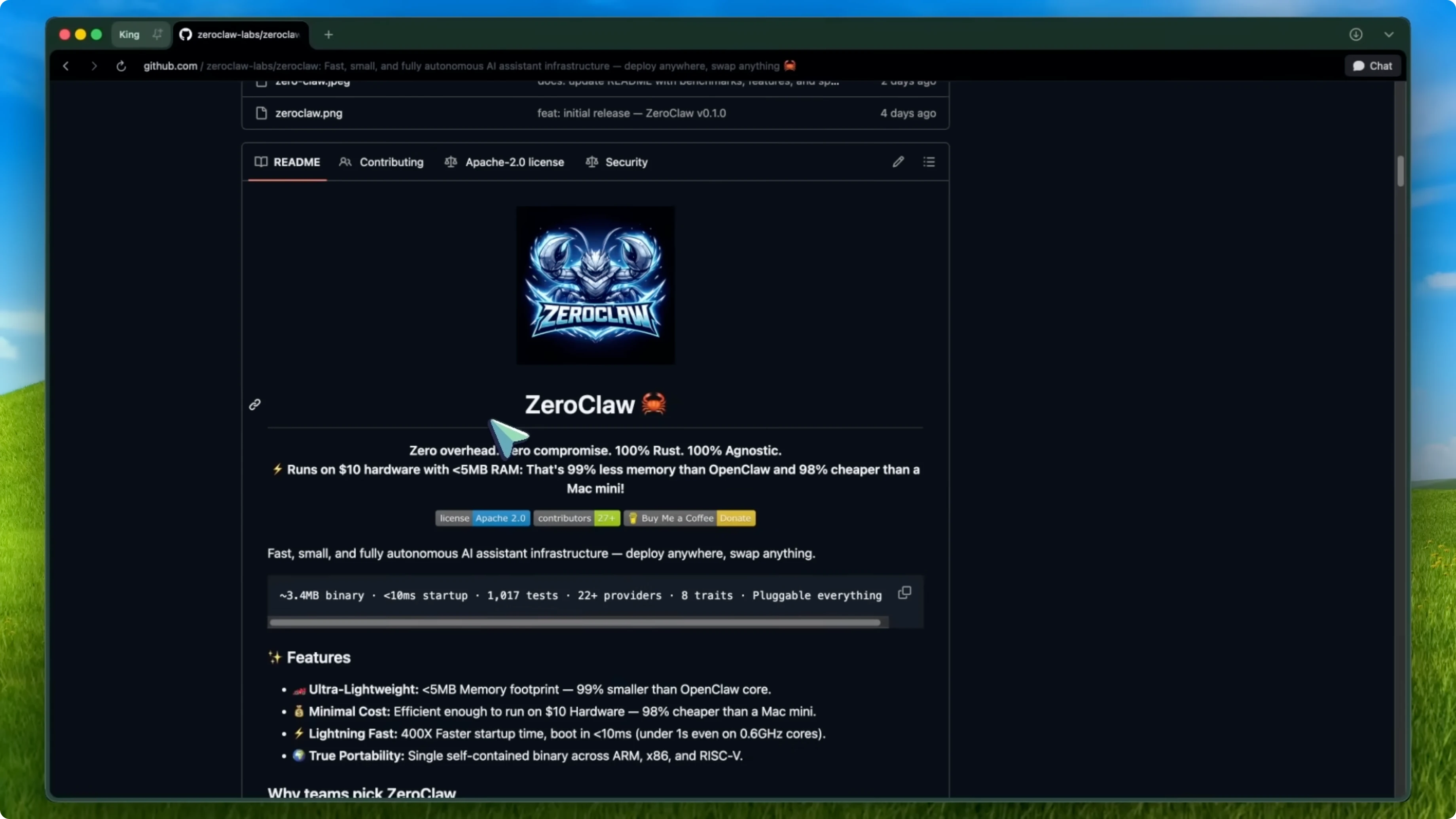
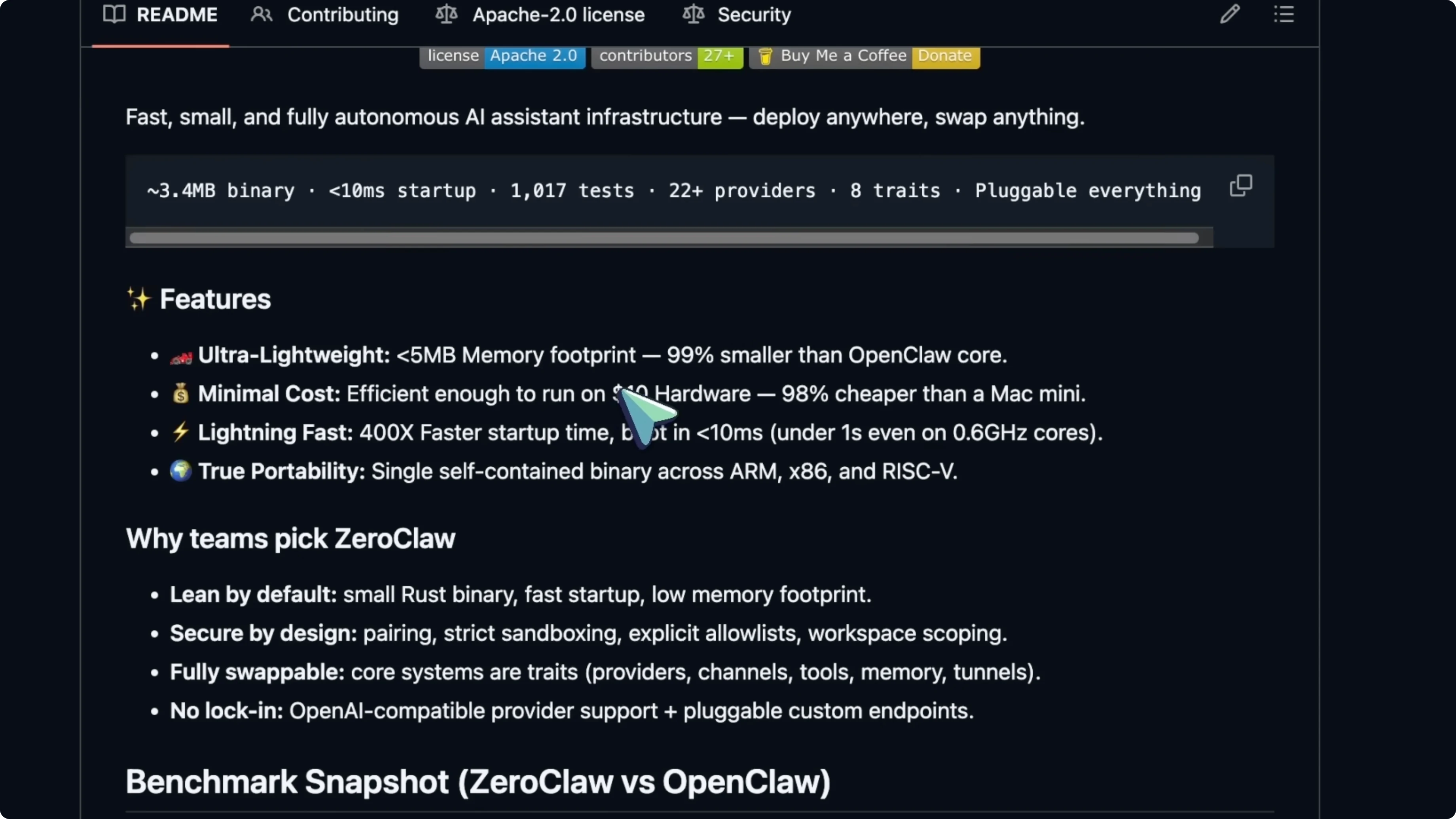
ZeroClaw’s tagline on GitHub is “claw done right.” It’s a fully autonomous AI assistant built entirely in Rust and designed to be an ultra lightweight replacement for OpenClaw. We’re talking a 3.4 MB binary, while OpenClaw’s core alone is over a gig.
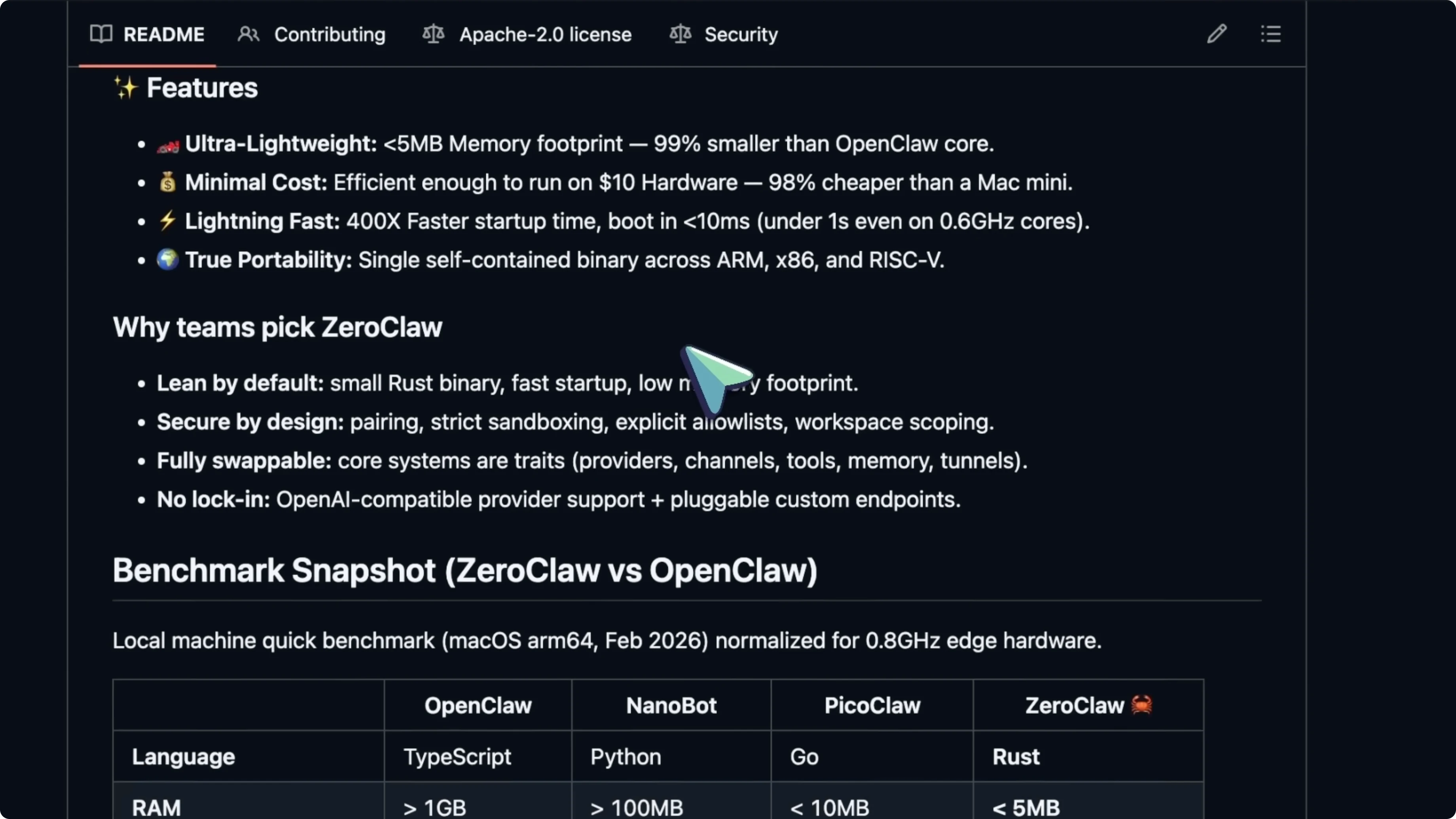
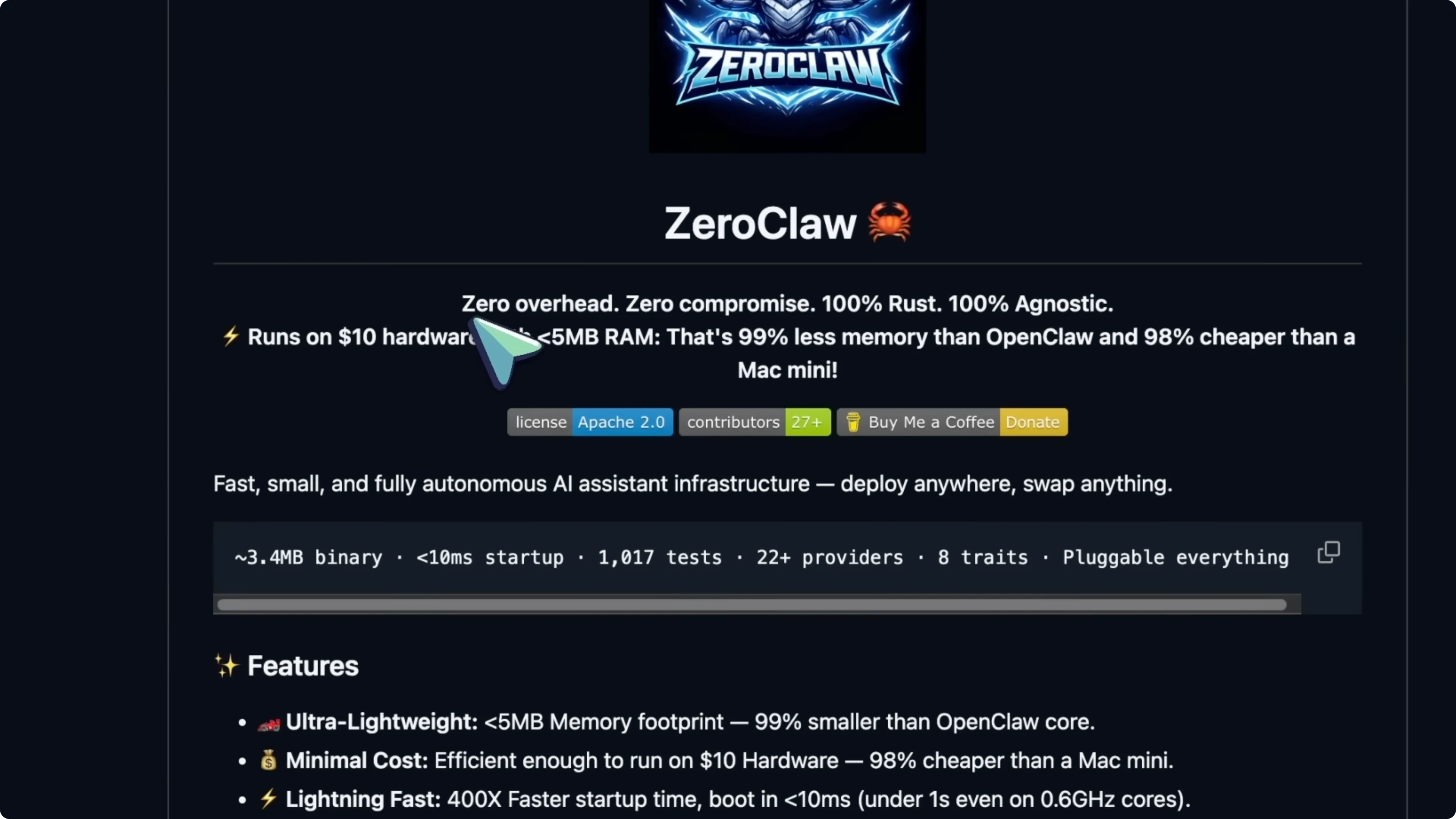
This is roughly 99 percent smaller, which is wild. The idea is your AI assistant should be a daemon, not an operating system. OpenClaw tries to do everything, which also means it demands serious hardware.
ZeroClaw takes the opposite approach. It’s lean, it’s fast, and it runs on basically anything. You can run it on a Raspberry Pi Zero, a $10 board.
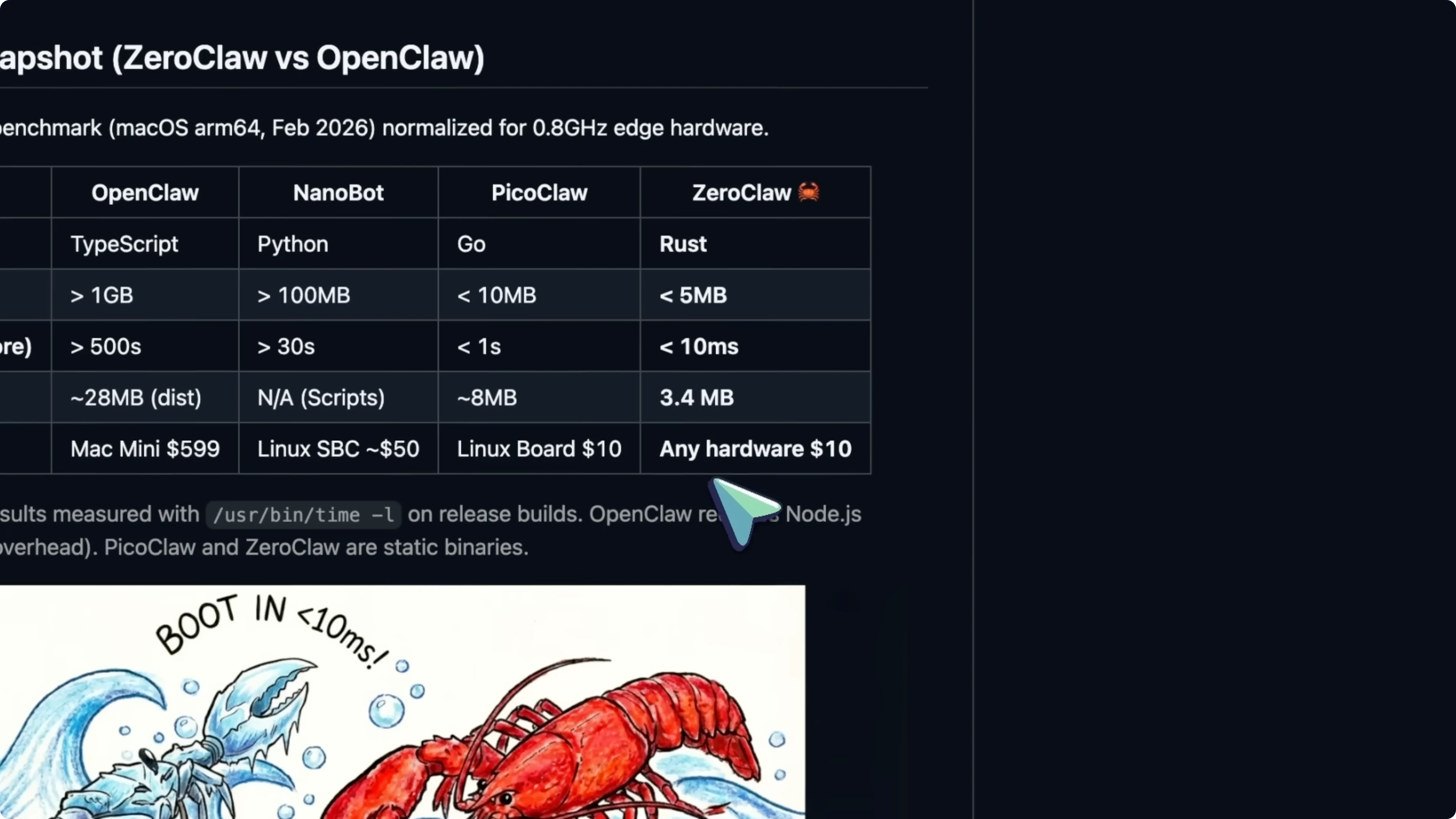
It uses under 5 MB of RAM. Startup time is under 10 milliseconds on a release build. OpenClaw often takes several seconds just to boot up.
Providers and platforms
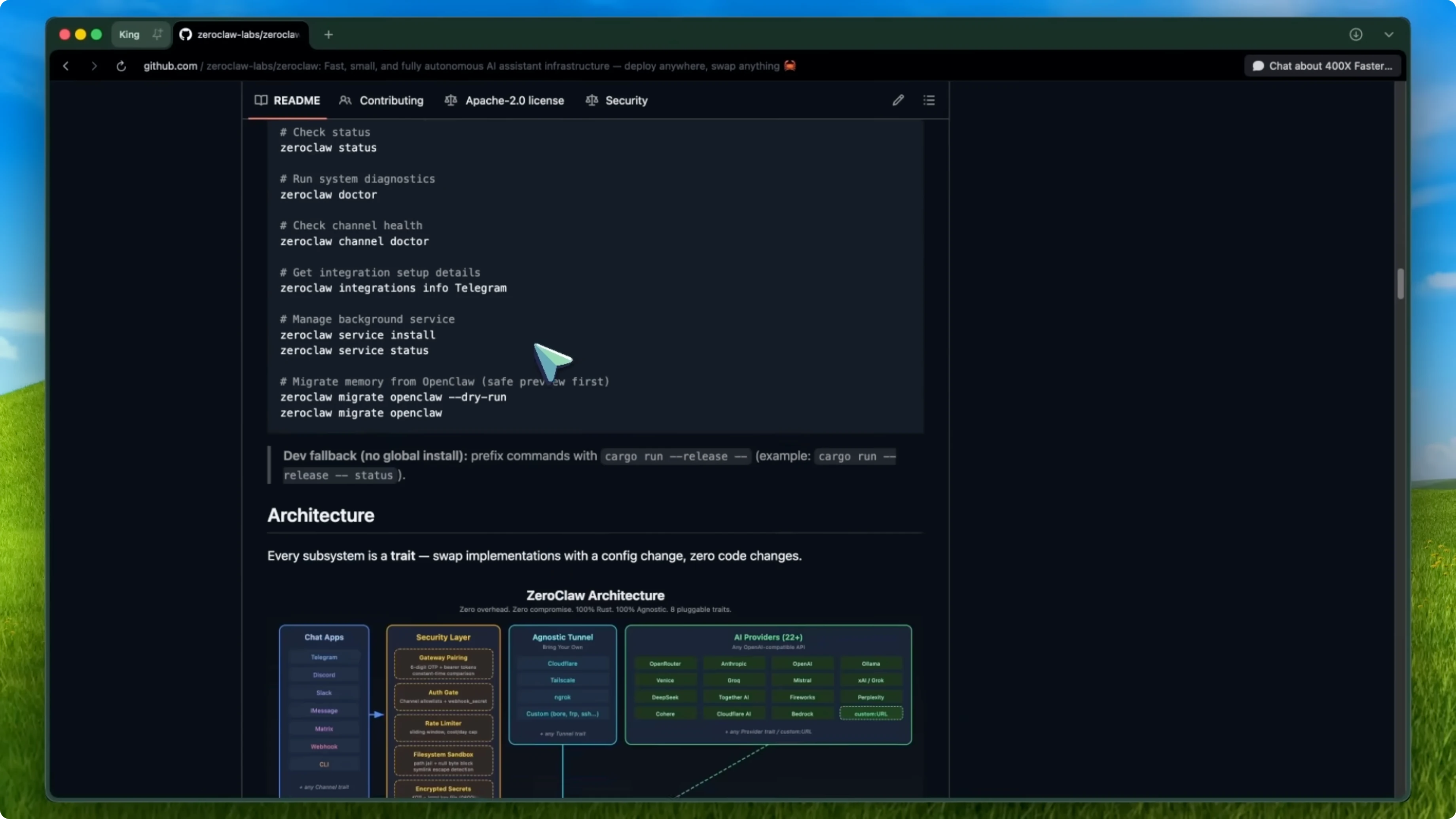
ZeroClaw works with over 22 AI providers out of the box. You get Claude, OpenAI, Ollama, Grok, Mistral, and more. If you run Ollama locally, this is a perfect match because you can keep both ZeroClaw and your models on the same cheap hardware.
There are guides for setting up ZeroClaw with Ollama, and people are saying it’s the fastest OpenClaw fork setup they’ve tried. It connects to Telegram, Discord, Slack, and WhatsApp. You can control your computer from your phone through a chat app, and it won’t eat your system resources while doing it.
For remote control ideas, see Claude remote control. It pairs nicely with the ZeroClaw approach. You get the flexibility without the bloat.
Read More: Deepsitev2.Com
Architecture
Everything in ZeroClaw is built on traits. Providers, channels, tools, and memory are all swappable, so you can change your AI provider or messaging channel by editing a config file. No code changes needed, and there’s no lock-in.
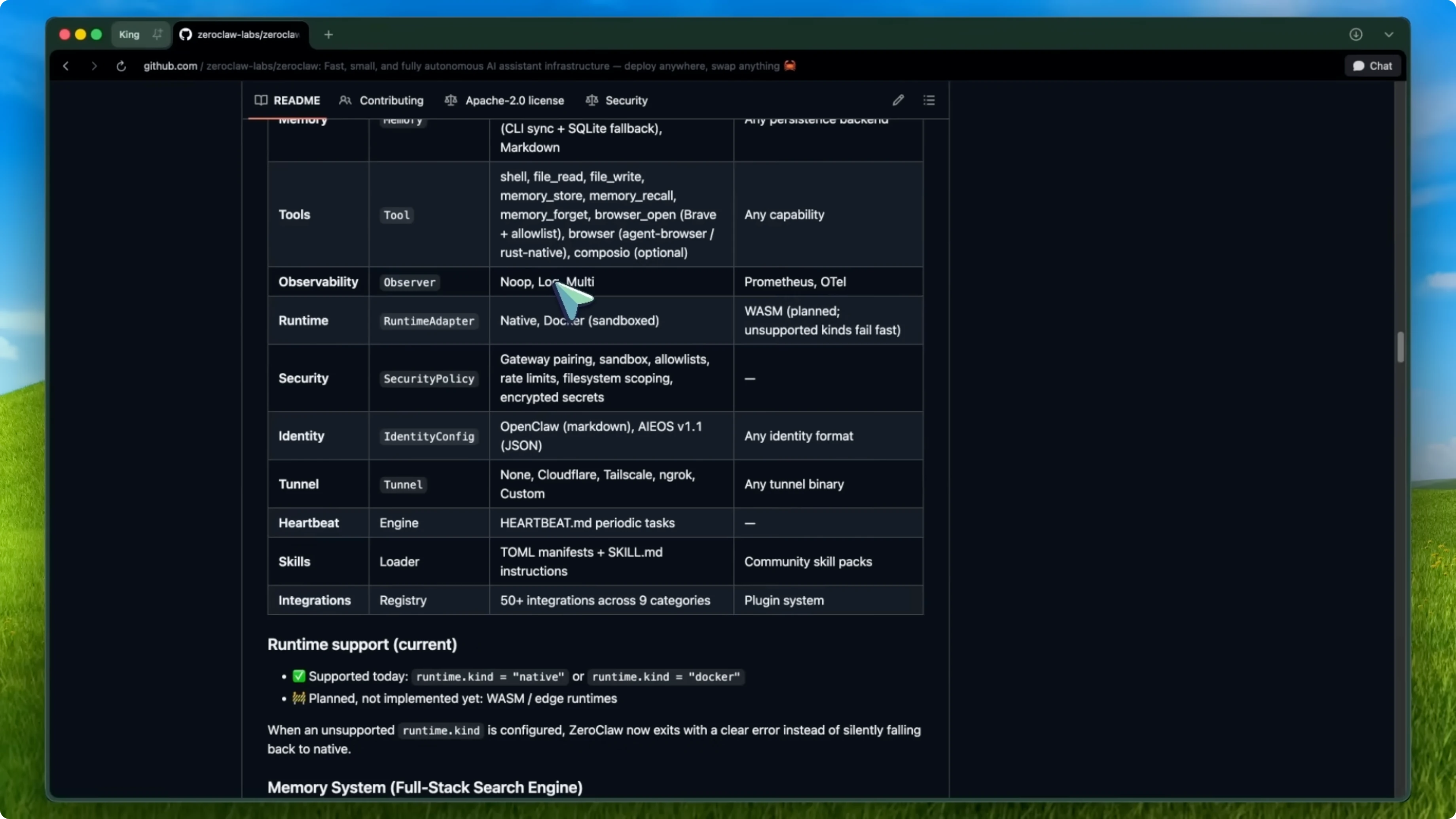
If you want to move from OpenAI to Ollama or from Telegram to Discord, you just change your config and you’re good to go. That flexibility is a big win. It keeps your stack portable and future proof.
Memory system
ZeroClaw builds a hybrid search engine on top of SQLite. It stores vector embeddings as blobs and uses SQLite’s FTS5 extension for full text search with BM25 scoring. The best part is zero external dependencies.
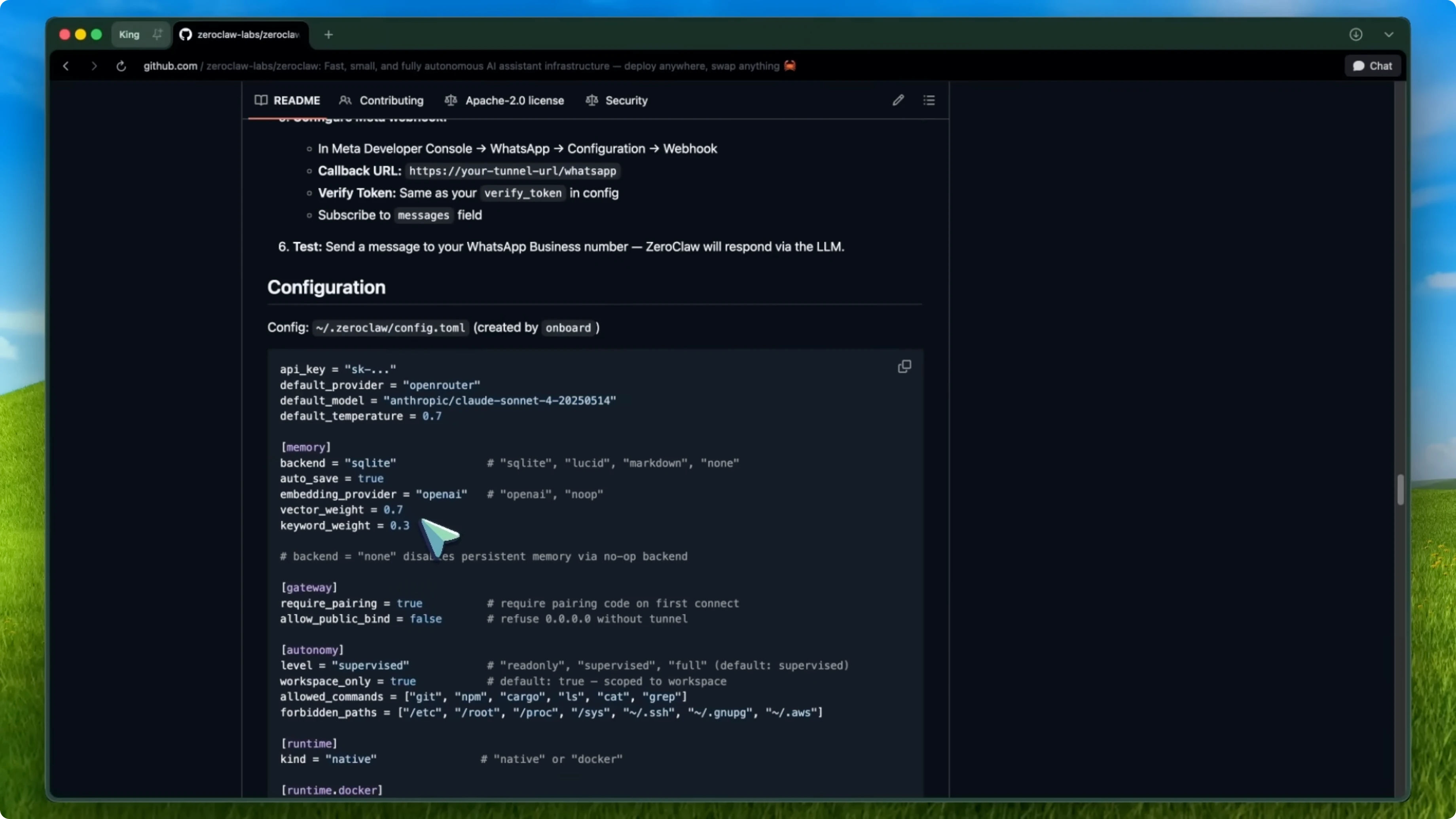
You don’t need Pinecone or Elasticsearch or any other heavyweight service. It’s all baked into that tiny binary. For a local-first setup, that’s a huge advantage.
Security
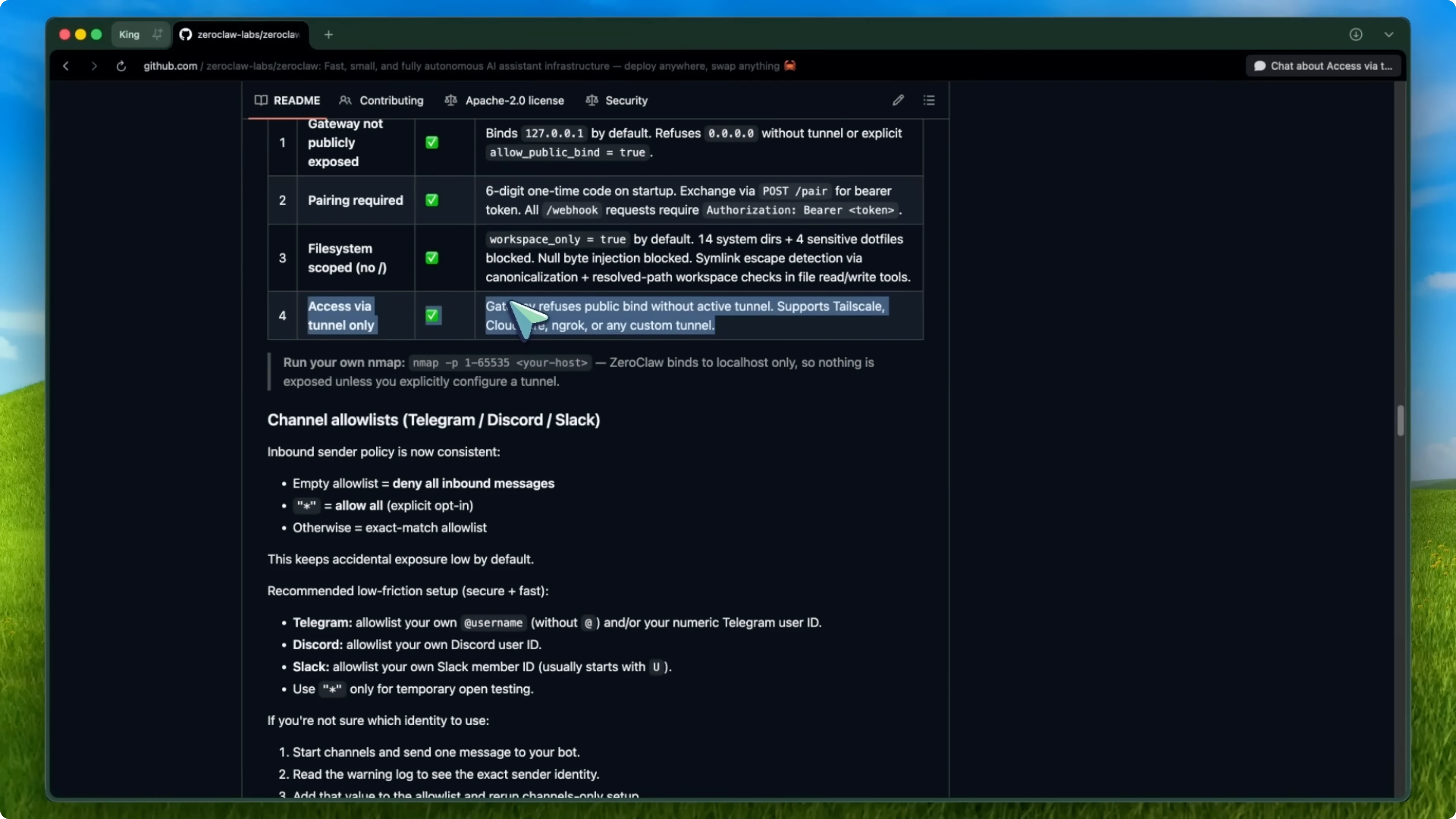
Security is a real standout here. You get strict sandboxing, explicit allow lists for commands, and workspace scoping so the agent can only access files in your designated workspace. It binds to localhost by default and refuses to bind to all interfaces unless you explicitly allow it.
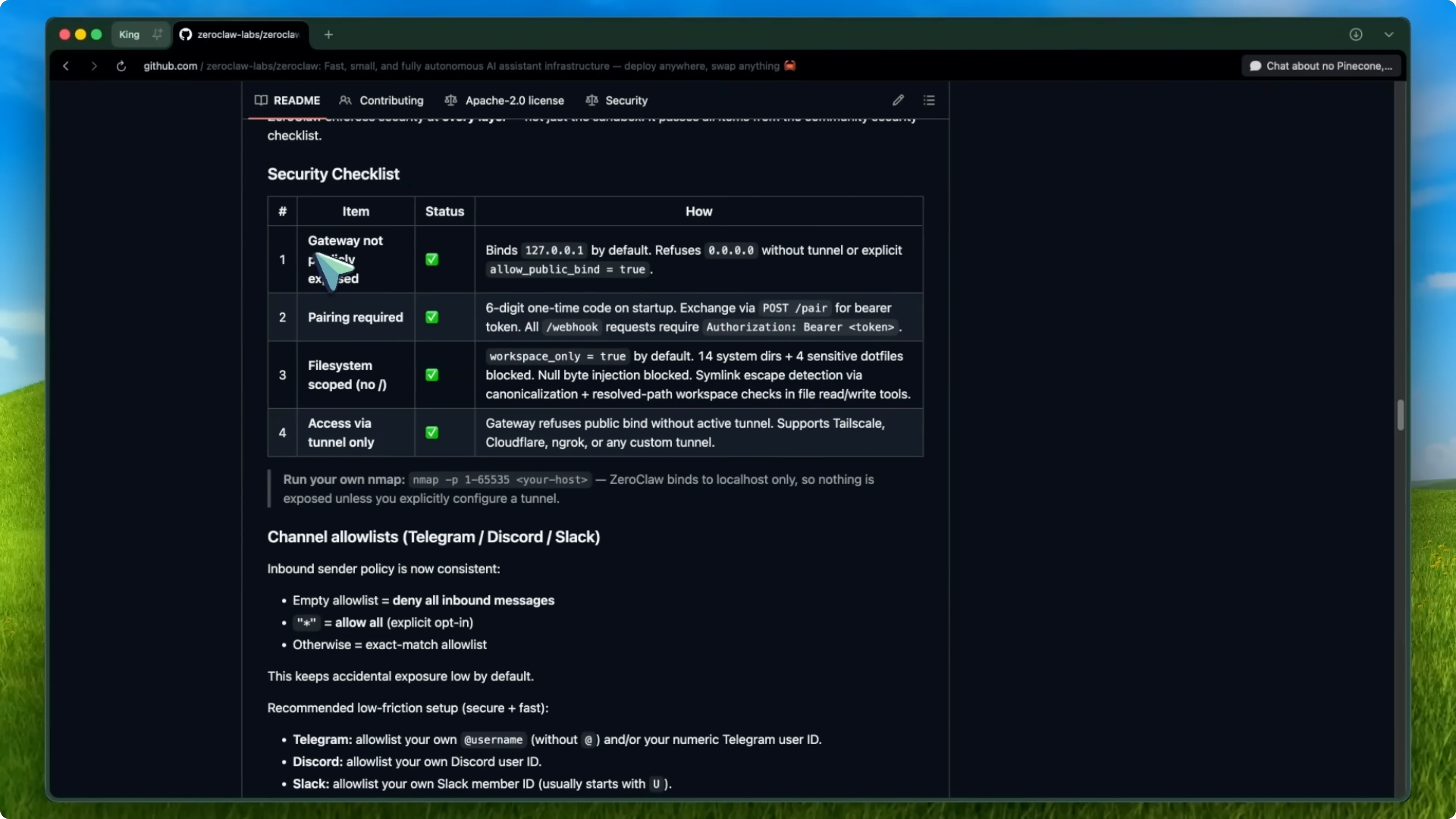
It passes all the items from the community security checklist for AI agents. This matters because info stealers have targeted OpenClaw config files and stolen API tokens. Having security baked in from the ground up is a big deal.
Migration from OpenClaw
There’s a built-in migration path if you want to switch. Run a dry run first, then execute the actual migration.
zeroclaw migrate openclaw --dry-run
zeroclaw migrate openclaw
It imports your OpenClaw memory and settings, so you don’t lose anything. The process is straightforward and predictable. It’s a low-risk way to test and then move.
Install ZeroClaw
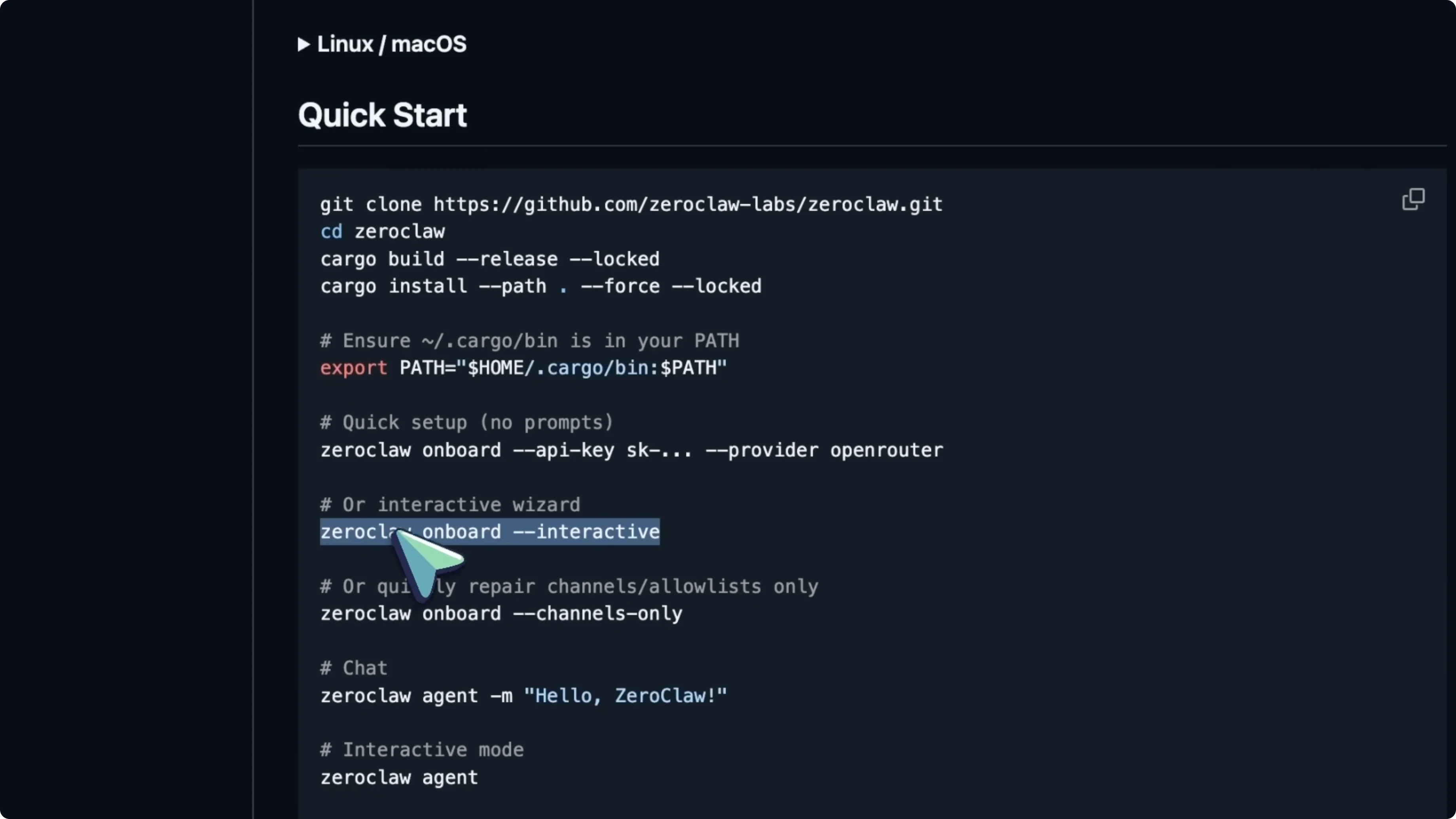
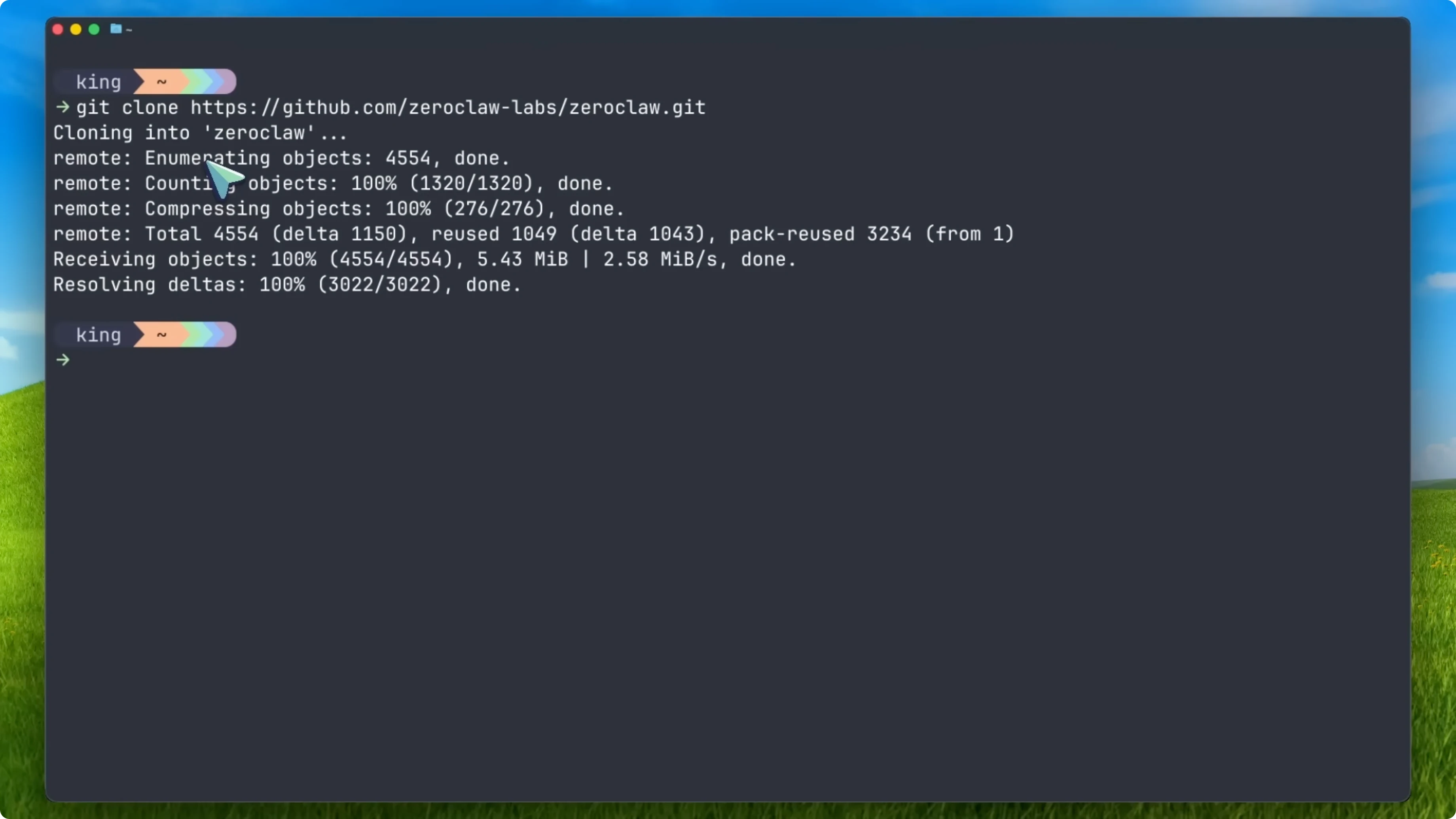
Clone the repo.
Build the release binary.
cargo build --release
Install from the current path.
cargo install --path .
Initialize the app and run the onboarding wizard.
zeroclaw init
The wizard sets up your AI provider, API keys, and channel configurations. Everything gets stored in a config file at ~/.zeroclaw/config.toml. Your API keys are encrypted by default, which is great.
Read More: About
My take on ZeroClaw as an OpenClaw alternative
I think ZeroClaw is genuinely exciting for a few reasons. It makes the whole AI agent idea accessible to people who don’t have expensive hardware. A $10 Raspberry Pi versus a Mac Mini is a massive difference.
The Rust foundation means it’s memory safe and incredibly fast. The modular architecture means you’re not locked into any single provider or platform. The fact that it has around 7,600 stars and over 640 forks shows the community is getting behind this, and it fits a bigger trend.
The local AI assistant space is maturing, and people want options that are lightweight and secure, not just feature packed. Keep a few things in mind though. Contributing requires Rust knowledge, and the plugin ecosystem isn’t as big as OpenClaw yet.
For what it does and how little it needs, this is a really solid alternative. If you’re running OpenClaw on anything less than a high-end machine, or if you care about security and efficiency, give ZeroClaw a try. It’s open source, it’s free, and it’s impressive.
Final thoughts
ZeroClaw hits a sweet spot for speed, size, and security. It brings a practical, modular approach to AI agents that runs on tiny hardware and still feels fast. If OpenClaw is too heavy for your setup, this feels like the right move.